
Kitchen Cabinet Quotes in Jonesboro, GA
Prepare a cabinet list and compare what each kitchen quote includes.
Send my cabinet inquiry
Or call (562) 203-3232. Calls only, we do not receive text messages.
A seller's lower-priced cabinet line may change more than the door you see. Before accepting a revised Jonesboro kitchen quote, ask what else moved with that substitution. Clayton Cabinet Ledger follows a hypothetical buyer comparing an initial range with an offered alternative, using the differences in construction, available pieces, and completion details to explain the revised price.
- Independent buying guidance
- Product inquiries
- Seller availability confirmed separately
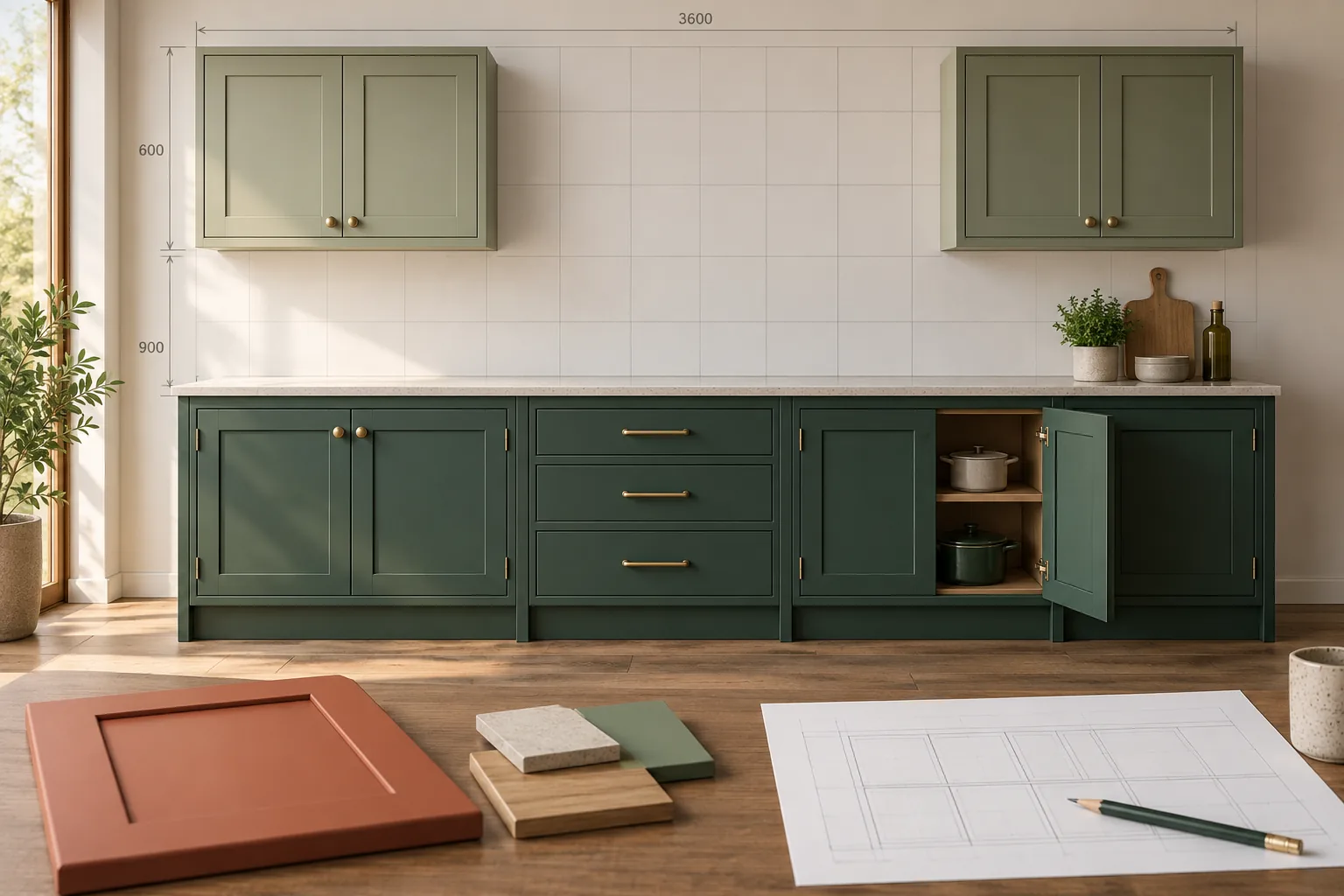
Buying questions: kitchen cabinet quote comparison
The goal is a legible choice between actual offers, not a universal ranking of product categories. Request information for the precise lines proposed and keep room verification separate from product pricing. The Ledger publishes comparison guidance, and its owner reviews inquiries; it does not sell either range, establish inventory, or vet a supplier by receiving your question.
About Clayton Cabinet Ledger
Know who handles each part
Independent cabinet buying information and quote-request service. We do not manufacture, stock or install cabinets. A referral, supplier response, appointment or purchase is not guaranteed. Product availability, delivery and installation must be confirmed directly with the seller or separately engaged contractor.
Name the original and alternative ranges
Preserve the original proposal with its product references, quantities, fronts, finish, hardware, and completion pieces. Give the alternative its own label and date. Avoid replacing the first total in your notes with a new one before recording what changed. Without both descriptions, it is hard to know what the buyer is choosing between.
In the hypothetical kitchen, the buyer asks for a simpler front while retaining the intended storage functions. The seller instead offers a different product range. That could be a reasonable option, but it needs to be described as a range substitution. Ask which intended units have equivalents and which require a different arrangement.
Identify what remains constant: retained appliances, intended room, destination, and any agreed priorities. Where the alternative changes a constant, flag it. A proposal can still be evaluated when it changes the arrangement, but the difference then includes design choices. A reduced total should not make those consequences disappear.
Examine what is behind the front
Request the actual box and front material information, hardware inclusions, and relevant product documents for each range. Similar finish words do not establish equivalent construction. Ask the seller to identify which differences matter to the offered units rather than making a broad claim that one category is always better.
If a performance standard is mentioned, obtain evidence attached to the exact proposed line. The KCMA reference identifies ANSI/KCMA A161.1 as a kitchen and vanity performance and construction standard. Its existence does not demonstrate that an unidentified product meets it or that the Ledger is certified.
In the hypothetical comparison, a hardware change might affect the buyer's preference even if the appearance is acceptable. Record that tradeoff alongside the relevant unit. The buyer can decide whether it matters after seeing the details. A headline discount is not a substitute for knowing which features the actual offer includes.

Check the complete arrangement for each line
A different range may have different available units or required completion pieces. Ask for an identified arrangement using its offered products, including visible ends, fillers, and trim where needed. A claim that both proposals cover the same kitchen should be supported by their line lists and drawings, not only an overall total.
Use a cross-reference for each intended function. If the original range includes an internal organizer that the alternative does not offer, list that as a difference. If the seller proposes another solution, keep its product information separate. Do not silently count an unavailable accessory as included because the main unit appears similar.
Ask who needs to recheck the room arrangement after a changed unit is proposed. Product pricing and fit approval remain separate tasks. A substitute that affects adjoining appliances or moving fronts may require another check. Preserve the original room information and identify any new uncertainty rather than assuming that a near-equivalent unit automatically fits.
Read price estimates as the result of specified changes
There is no supplied Jonesboro price schedule for either hypothetical range. Request written estimates that make the complete original and alternative scopes identifiable. Keep delivery, applicable tax, assembly if offered, and other charges legible. A difference in the product subtotal is only one part of the intended purchase comparison.
Ask whether the alternative changes the transaction conditions, availability assessment, or fulfillment arrangement. If one quote includes assembly and another does not, identify who would undertake the remaining task and obtain that scope independently. Do not label the alternative cheaper overall until you have accounted for the responsibilities you intend to buy.
Alternative-range estimates are subject to change with selected units and fulfillment terms; the seller's written quote establishes the accepted price and the product version it supplies. Record the date and assumptions of each offer. Any independently arranged labor must have its own written scope rather than being inferred from a kitchen product total.
Ask for an explanation of every unpriced difference
Create a short list of lines that cannot yet be compared. The reason may be an omitted accessory, an unspecified panel, or a proposed unit without documentation. Ask the seller to resolve the reason, not simply reduce the total again. Repeated discounts can leave the underlying scope less clear instead of more attractive.
The FTC's written-estimate guidance supports comparing scope, materials, timing, and price. Apply that to each actual offer. It does not establish that a price is available locally or that the Ledger has reviewed a particular seller's practices. The buyer still needs transaction evidence from that seller.
In the hypothetical project, the buyer may decide to retain the original line after understanding the difference, accept the alternative, or request a mixed proposal if the seller offers one. Each is a purchasing choice, not a failure of the comparison. The result should state what the buyer accepts and what remains unresolved.

Carry the chosen range into the accepted documents
Before ordering, reconcile the chosen quote with its current drawing and product references. A final document should not contain one range's price and another range's unit list. Ask for corrections where the versions disagree. Store the accepted comparison answer with the purchasing record so a later substitution can be assessed against it.
Confirm destination and handling for the actual Jonesboro address with the seller. A county corridor named in a planning document does not supply freight acceptance. Ask about the seller's substitution procedure and how a change would be approved. An intention to buy one line should not become permission for an unexplained replacement.
For a Ledger inquiry, identify the two offered ranges and the difference you need help organizing. The owner records it for review; any possible contact sharing requires permission and recipient willingness. No automatic referral or stock verification is implied. Purchase authorization must follow the seller's actual accepted documents after the remaining questions have answers.
Inquiry process
From buying questions to a possible supplier quote
Sending an inquiry does not reserve products or book work.
Describe the purchase
Include project ZIP, room, approximate cabinet list and preferred timing.
Clarify requirements
Identify assembly, access, measurements and any separately arranged labor.
Confirm referral availability
An inquiry can be referred only if a suitable seller accepts the location and product request.
Review seller terms
Confirm the final drawing, itemized price, payment, delivery and return terms directly before ordering.
Illustrative product choices
Illustrative product visualizations, not completed work, local properties or supplier facilities.
Questions
Kitchen Cabinet Quote Comparison: Common Questions
Is a simpler door necessarily the same cabinet at a lower price?
Not necessarily. Ask whether the revised offer changes the entire range, construction, hardware, available units, or included accessories. A simpler appearance can accompany a broader substitution. Preserve the exact original and alternative descriptions before interpreting the difference in their totals.
What if one range lacks a unit in my intended plan?
Ask the seller to identify its proposed substitute arrangement and any consequences for adjoining pieces or fit. Keep that change distinct in the comparison. A total for a different arrangement may be useful, but it should not be described as an equivalent line without evidence.
Does a standard reference prove both lines are certified?
Request evidence for each exact offered line. A published performance standard establishes a framework, not the status of every product a seller mentions. Record which documentation applies and leave an unsupported certification claim unresolved rather than carrying it into the purchase.
When is the range comparison ready to use?
When the offered products, completion pieces, responsibilities, price assumptions, and material differences are clear enough for a deliberate choice. Final fit and destination acceptance still need the responsible parties' confirmation. An inquiry review alone does not establish either.
Talk to us about kitchen cabinet quote comparison
Describe the purchase and project ZIP in Jonesboro. Supplier acceptance and any referral are confirmed separately; no visit or quote is booked by this form.
Calls only, we do not receive text messages.